

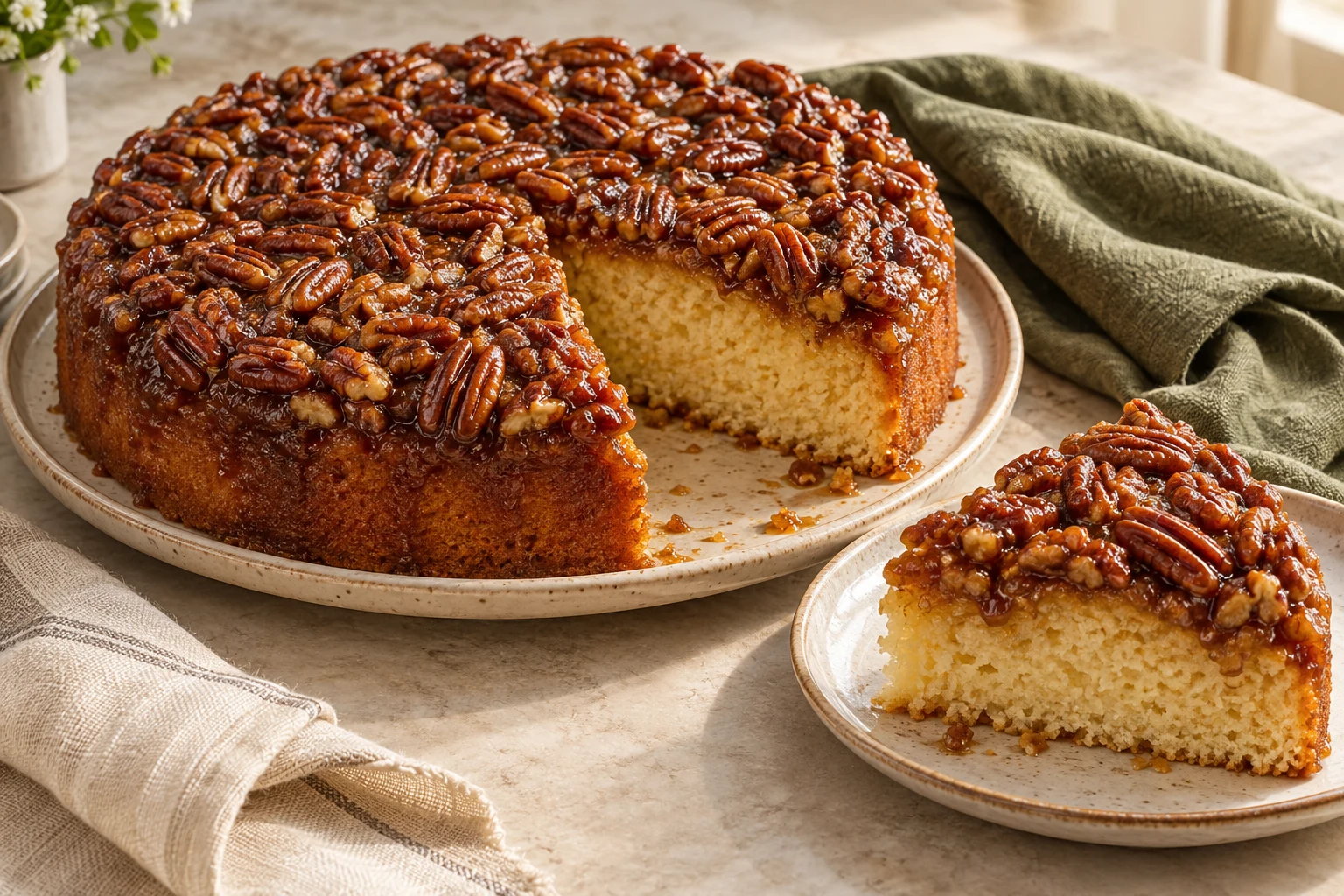
Pecan Upside Down Cake with Brown Sugar Maple Topping
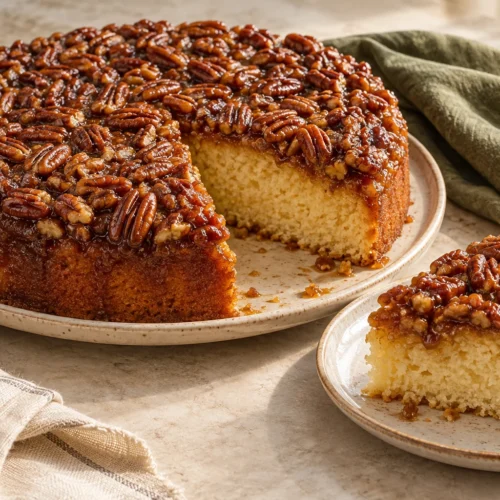
Pecan Upside Down Cake brings two very different textures to the same forkful: a soft vanilla cake underneath and a glossy layer of pecans on top. Brown sugar gives the topping a deep sweetness, while a little maple syrup adds a warm note that suits the nuts. Everything bakes in one round pan, and the final turn onto a plate does the decorating for you.
This Talking Kitchens version uses a sour cream batter and a brown sugar maple topping. It is a lovely option for a relaxed gathering, a holiday dessert table, or an afternoon slice alongside coffee.
What makes this pecan cake different?
Unlike a frosted layer cake, this dessert starts with its finishing layer at the bottom of the pan. The pecans sit in a butter-and-sugar mixture while the batter bakes above them. After a short rest, you turn the cake over to reveal the sticky nut topping.
If you enjoy Butter Pecan Cake, the flavors will feel familiar, but the arrangement is different. Here, most of the pecan crunch stays on the outside rather than being folded through the crumb. That makes the contrast between the tender cake and the nuts the main attraction.
Ingredients for Pecan Upside Down Cake
The full measurements are in the recipe card below. Before you begin, separate the butter and salt for the topping from the amounts needed for the batter; both appear twice on the shopping list.
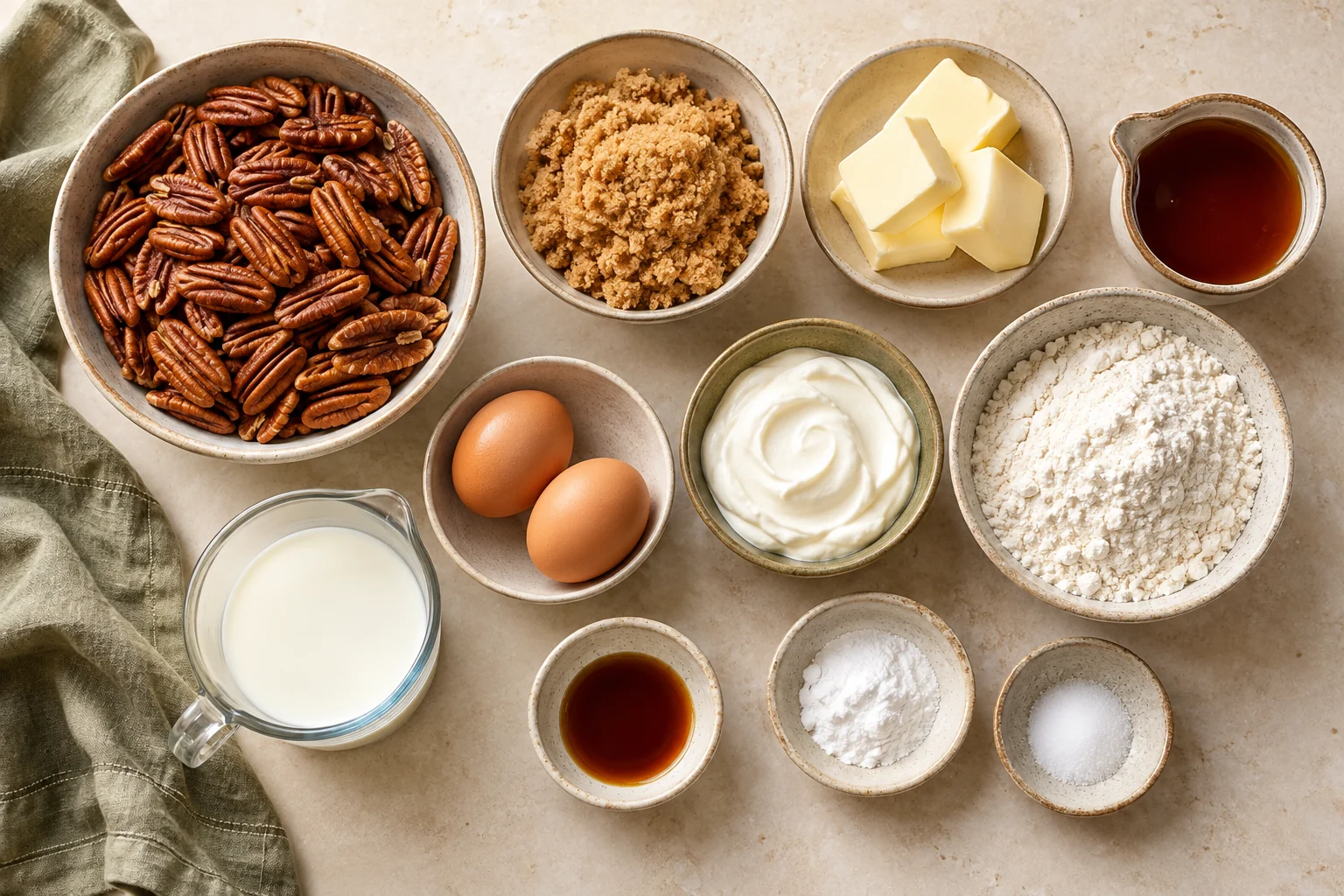
- Pecans: Use plain, unroasted nuts. Halves make a pretty surface, while smaller pieces fill the gaps. Avoid salted or candied pecans, which change the balance of the topping.
- Light brown sugar: Pack it into the measuring cup. It supplies both sweetness and the familiar molasses flavor.
- Maple syrup: Choose pure maple syrup for its flavor. Pancake syrup is a different product and may behave differently.
- Unsalted butter: Melt the topping portion, but soften the batter portion so it can be beaten with the sugar.
- All-purpose flour and baking powder: These provide structure and lift. Spoon flour into the cup and level it, or use the gram measurement.
- Eggs, sour cream, and milk: Let these lose their refrigerator chill before mixing. Full-fat sour cream gives the batter richness.
- Vanilla and salt: Vanilla rounds out the cake flavor, while salt keeps the sweetness from tasting flat.
How to make it, from pan to plate
1. Build the topping first
Prepare the cake pan before heating the sugar mixture. A parchment circle across the base gives you an extra way to release the pecans later. Once the topping ingredients are combined and gently bubbling, spread them in the pan and arrange the nuts evenly. Keep the saucepan heat moderate; you are bringing the mixture together, not making a dark caramel.
2. Mix a soft, evenly blended batter
Spend a few minutes beating the softened butter and sugar before adding the eggs. Scrape the bowl so no dense butter mixture remains at the bottom. When the flour goes in, change your approach: use low speed and mix only until the batter comes together. Alternating the dry mixture with the sour cream and milk makes the thick batter easier to combine.
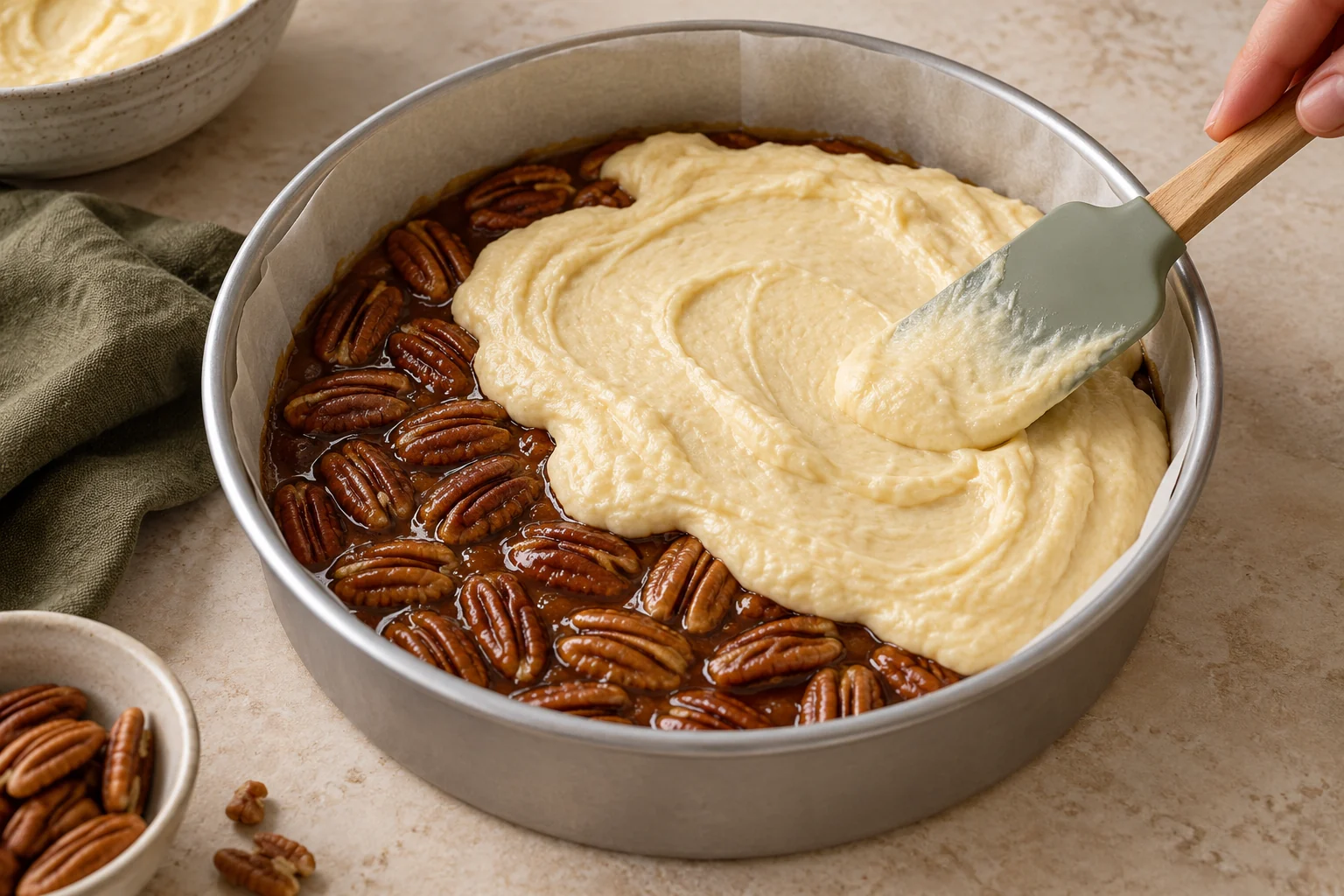
3. Bake, check, and invert
Add the batter in small spoonfuls so it does not push all the pecans to one side. Smooth the top and bake with the pan sitting on a rimmed sheet. Check the cake layer with a skewer, taking care not to mistake the sticky topping below for raw batter. After the timed rest, use oven mitts and a rimmed serving plate to turn out the warm cake.
Tips for a clean upside-down finish
- Choose a solid pan. A springform seam can let the hot topping leak. A standard 9-inch round pan with sides at least 2 inches tall is the intended size.
- Line and grease the base. Parchment helps keep the nut layer together when the cake leaves the pan.
- Do not rush the flip. Rest the cake for 10 minutes, then invert while the topping is still warm. Letting it become completely cold in the pan can make release harder.
- Use a plate with a rim. It should be wider than the cake and able to catch any warm syrup.
- Patch small gaps promptly. If a few pecans stay behind, lift them onto the warm cake with a spoon. A small imperfection does not need a new topping.
Let Them Eat Cake: serving ideas and dessert toppings
The pecan layer already does most of the work, so start with a plain slice. For a more generous plate, add unsweetened whipped cream, a small scoop of vanilla ice cream, or a spoonful of thick plain yogurt. Keep extra dessert toppings light rather than covering up the nuts with another heavy layer of sauce.
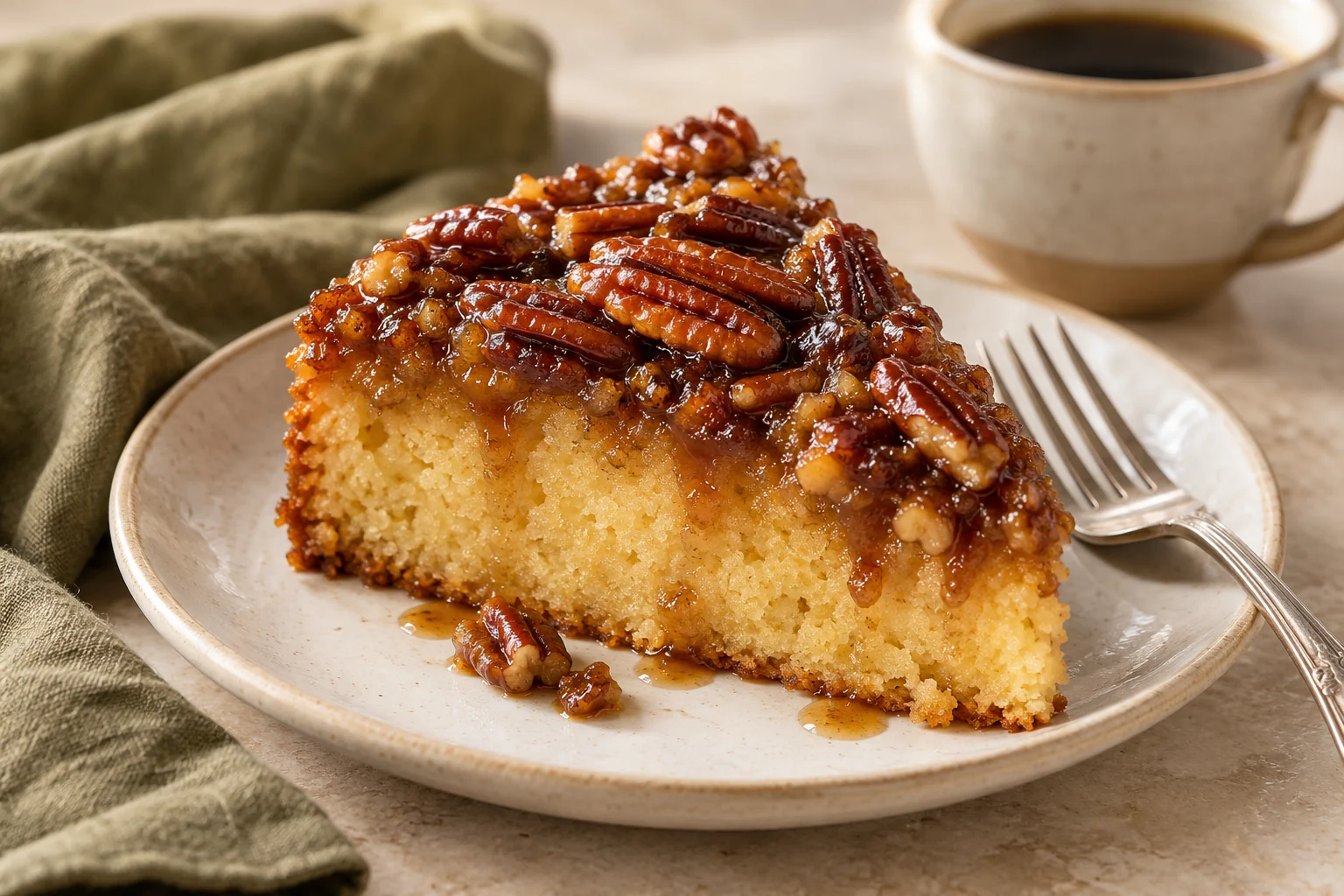
Serving this as a coffee cake simply means pairing it with coffee; there is no coffee in the batter. A small slice also works with black tea. If you are planning a table of homemade desserts, offer something with a contrasting texture, such as Decadent Turtle Bars or crisp-edged Cinnamon Pecan Rugelach.
Make-ahead and leftover notes
For the neatest slices, give the cake time to settle after you turn it out. Cool leftovers, cover them, and refrigerate within two hours. Use refrigerated portions within 3–4 days. Let a slice stand briefly at room temperature before serving, or warm it gently in short microwave bursts.
For longer storage, wrap individual cooled slices and freeze for up to two months for best quality. Thaw covered in the refrigerator. The pecans may soften after chilling or freezing, so expect a different texture from the freshly cooled cake.
Pecan Upside Down Cake FAQs
Can I use a Bundt pan?
This recipe is written for a round cake pan, and a Bundt conversion has not been tested. Bundt cake recipes need to account for a differently shaped pan and a more detailed surface to grease. If a ring-shaped cake is your goal, choose a recipe developed for that pan instead of assuming the baking time will be the same.
Why did some of the pecan topping stick?
Common causes include an unlined base, missed patches when greasing, or leaving the cake in the pan until the sugar layer becomes cold and firm. Use the parchment circle, grease thoroughly, and follow the short resting period before turning it out.
Can I replace the pecans with walnuts?
Walnuts are a possible variation, but they bring a stronger, slightly bitter flavor. That swap has not been tested in this version. For the intended taste and appearance, keep the pecans.
Is this the same as pecan pie?
No. Both desserts pair pecans with a sweet filling or topping, but this one has a butter cake base rather than a pastry shell and pie filling. Think of it as a pecan cake with its own built-in finish.
More pecan recipes to explore
Keep your baking list going with Butter Pecan Cake, Cinnamon Pecan Rugelach, and the other Sweet Endings recipes. Each offers a different way to make nuts part of a homemade dessert.
Recipe and image note: This version has not been kitchen-tested by Talking Kitchens. Baking times are estimates; use the doneness checks in the recipe. The featured image is an AI-generated illustration, not a photograph of a test bake. The upside-down pecan cake idea was inspired by Kitchen Divas; the formula and wording here are independently written.
Pecan Upside Down Cake
Equipment
- 1 9-inch round cake pan, at least 2 inches deep solid base; not a springform pan
- 1 rimmed baking sheet
- 1 heatproof serving plate with a rim
Ingredients
Brown sugar maple topping
- 4 tablespoons unsalted butter 57 g
- 3/4 cup light brown sugar 150 g, packed
- 2 tablespoons pure maple syrup
- 2 tablespoons heavy cream
- 1/4 teaspoon fine salt
- 1 1/2 cups pecan halves and pieces about 165 g, unroasted and unsalted
Vanilla sour cream cake
- 1 1/2 cups all-purpose flour 180 g, spooned and leveled
- 1 1/2 teaspoons baking powder
- 1/2 teaspoon fine salt
- 1/2 cup unsalted butter 113 g, softened
- 2/3 cup granulated sugar 133 g
- 2 large eggs at room temperature
- 2 teaspoons vanilla extract
- 1/2 cup full-fat sour cream 120 g, at room temperature
- 1/4 cup whole milk 60 ml, at room temperature
Instructions
- Heat the oven to 350°F (175°C), conventional setting. Grease a solid 9-inch round cake pan at least 2 inches deep. Line the base with parchment and grease the parchment lightly. Set the pan on a rimmed baking sheet.
- Melt the topping butter in a small saucepan over medium-low heat. Stir in the brown sugar, maple syrup, cream, and 1/4 teaspoon salt. Stir until evenly combined and gently bubbling, then cook for about 1 minute. Remove from the heat. Spread the mixture over the lined pan base and distribute the pecans evenly over it.
- Whisk the flour, baking powder, and 1/2 teaspoon salt together in a bowl. In a separate small bowl, stir the sour cream and milk until smooth.
- Beat the softened cake butter with the granulated sugar for 2–3 minutes until lighter in color and fluffy. Beat in the eggs individually, scraping the bowl between additions, then mix in the vanilla.
- On low speed, add the flour mixture in three portions, alternating with the sour cream mixture in two portions. Start and finish with flour. Stop mixing as soon as the dry streaks disappear; finish with a spatula if needed.
- Spoon the batter gently over the pecans and smooth the surface without disturbing the topping. Bake for approximately 35–45 minutes, checking from 35 minutes. The center should spring back lightly, and a skewer inserted into the cake layer should have no wet batter. Loosely cover with foil if the top colors before the center is baked.
- Let the pan stand on a cooling rack for 10 minutes. Run a thin knife around the edge. Place a heatproof serving plate with a rim over the pan. Using oven mitts and holding plate and pan firmly together, turn them over in one controlled movement. Lift off the pan and peel away the parchment. Hot topping can drip; keep hands clear of the edge.
- Replace any pecans left on the parchment while the topping is still warm. Cool for at least 20 more minutes before cutting into 10 slices. The listed cooking time is an estimate; use the doneness cues rather than the clock alone.


